Barn Call Guide
What to Expect at an Equine Chiropractic Barn Call
From Short Go Equine Chiropractic · Published September 4, 2026 · Updated September 7, 2026
A good barn call should feel organized, calm, and horse-specific. Here is the usual flow—from the information we ask for before arrival to the questions you can expect after the assessment.
Before the Visit
When you request a barn call, share the horse’s location, workload, recent changes, prior injuries or diagnoses, current medications, and veterinarian information. That history helps put what we see at the barn into context.
For Texas appointments, animal chiropractic is handled as complementary veterinary care and is subject to applicable veterinary requirements. We confirm the current coordination and documentation process before care is provided.
1. History and Current Concerns
The visit starts with conversation. What changed? When did it begin? Is it different under saddle, after hauling, in one direction, or during a particular maneuver? A timeline is more useful than trying to name the problem yourself.
Please mention recent falls, new or worsening lameness, fever, swelling, wounds, neurologic signs, medication changes, and any veterinary workup. Those details can change whether complementary care is appropriate that day.
2. Standing and Movement Observation
When it is safe for the horse and handler, the practitioner may observe posture and movement, often at a walk or trot on a suitable surface. This is not the same as a veterinary lameness diagnosis. A veterinary lameness examination can include diagnostic anesthesia, imaging, laboratory testing, and treatment decisions that are outside a chiropractic visit.
The goal here is to understand the horse’s movement pattern and decide what should be assessed more closely by hand.
3. Hands-On Joint-Motion Assessment
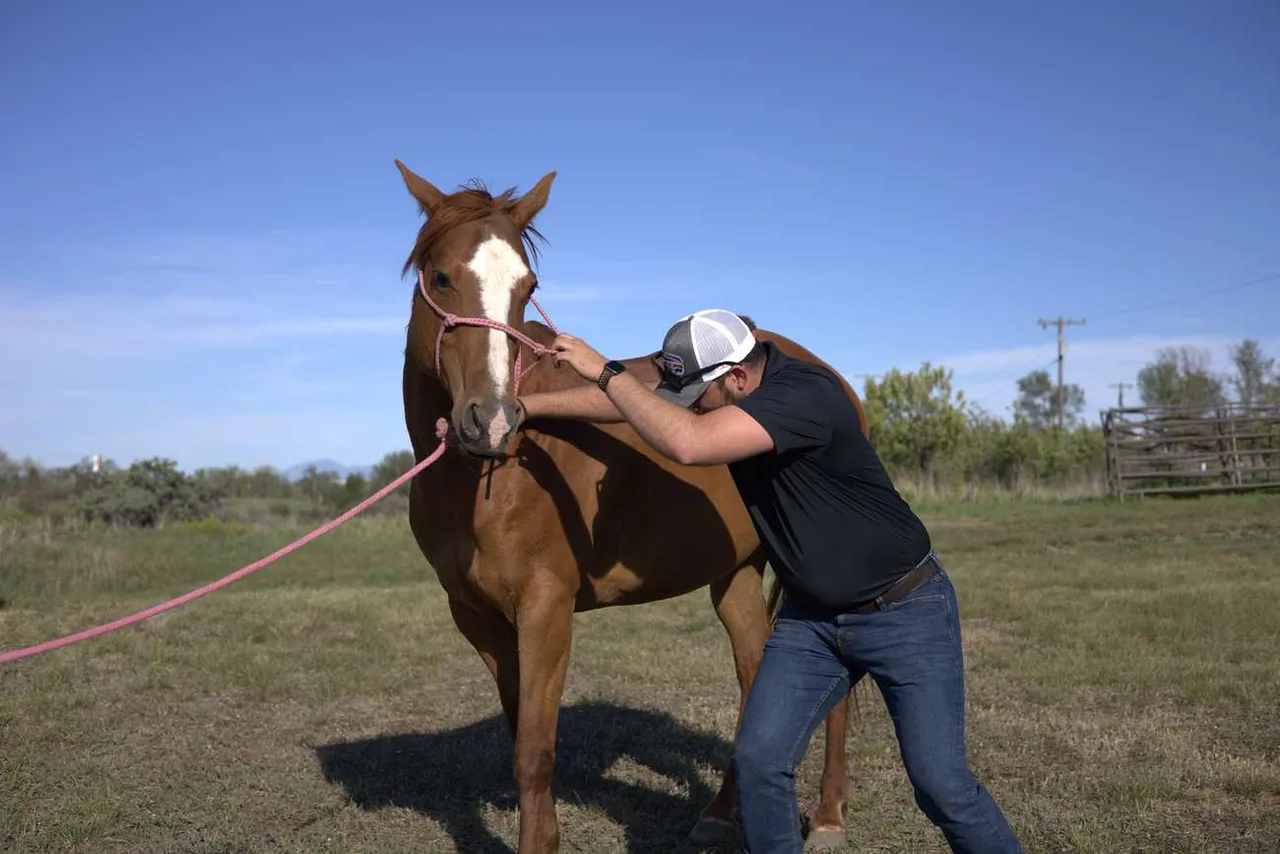
The hands-on portion may include palpation and assessment of spinal, pelvic, and limb-joint motion. Findings are considered alongside the horse’s history, conformation, workload, and behavior during the examination.
If a finding suggests injury, disease, significant pain, or another concern that needs veterinary diagnosis, the right next step may be veterinary evaluation rather than an adjustment.
4. Adjustment When Appropriate
When the assessment supports it, the practitioner may use a controlled manual or instrument-assisted adjustment directed at a specific joint-motion restriction. The visit is tailored to the individual horse rather than following the same routine on every animal.
No specific result or timeline can be promised. Response varies with the horse, workload, underlying health, and the nature of the finding.
5. Findings and Next Steps
At the end, ask what was observed, whether anything should be discussed with your veterinarian or farrier, and what activity guidance applies to your horse. Follow-up is based on the individual assessment—not an automatic schedule.
If anything changes or worsens after the visit, contact the appropriate veterinarian or practitioner promptly.
Have These Ready
- A safe halter, lead, and capable handler
- A level, reasonably firm, non-slip area with room to observe movement
- The horse’s recent history, workload, and current medications
- Veterinarian and farrier information
- Any relevant veterinary findings, images, or care instructions
- Your questions about the assessment and next steps
Sources and further reading
This owner guide provides general education, not veterinary diagnosis or treatment advice.
Continue Reading
Owner Guide
Chiropractic Visit vs. Lameness Exam
Understand when a horse needs a veterinary lameness examination, what chiropractic assessment can address, and why the two roles should work together.
Owner Guide
Prepare for a Barn Call
Use this practical checklist to prepare your horse, history, handler, and barn area for a safe and useful equine chiropractic visit.
Owner Guide
17 Signs Worth a Closer Look
Movement and behavior changes that may justify veterinary or joint-motion assessment.
Have a Question About Your Horse?
Tell us what you are seeing and where your horse is located. We will explain the appropriate next step before confirming a visit.
Find a Barn Call Near You
Explore mobile equine chiropractic in Weatherford, Fort Worth, Dallas, McKinney, and other North Texas service areas, or see seasonal Montana routes.
Read about our services and visit planning or Dr. Leo's training and approach.